
Three-phase UPS
 Ai90Modular rack, 480V or 400/230V, up to 70 kWView Ai90 →
 M90Ci-2SModular, 400/230V, 10 kWView M90Ci-2S →
 M90Ci-6SModular, 400/230V, up to 60 kWView M90Ci-6S →
 X90-1SModular, 480V, up to 70 kWView X90-1S →
 X90-2SModular, 480V, up to 140 kWView X90-2S →
 X90-5SModular, 480V, up to 350 kWView X90-5S →
 X90-10SModular, 480V, up to 700 kWView X90-10S →
Three-phase UPS
Three-phase UPS for data centers, medical imaging, industrial and building loads, from 8 kW to 700 kW. Choose by voltage first, then by how much redundancy and room to grow you need: lithium and tower units at 208/120V, modular N+1 systems at 208/120V, and modular systems at 400V and 480V.
208/120V
Self-contained three-phase UPS: integrated lithium or a tower with VRLA batteries.
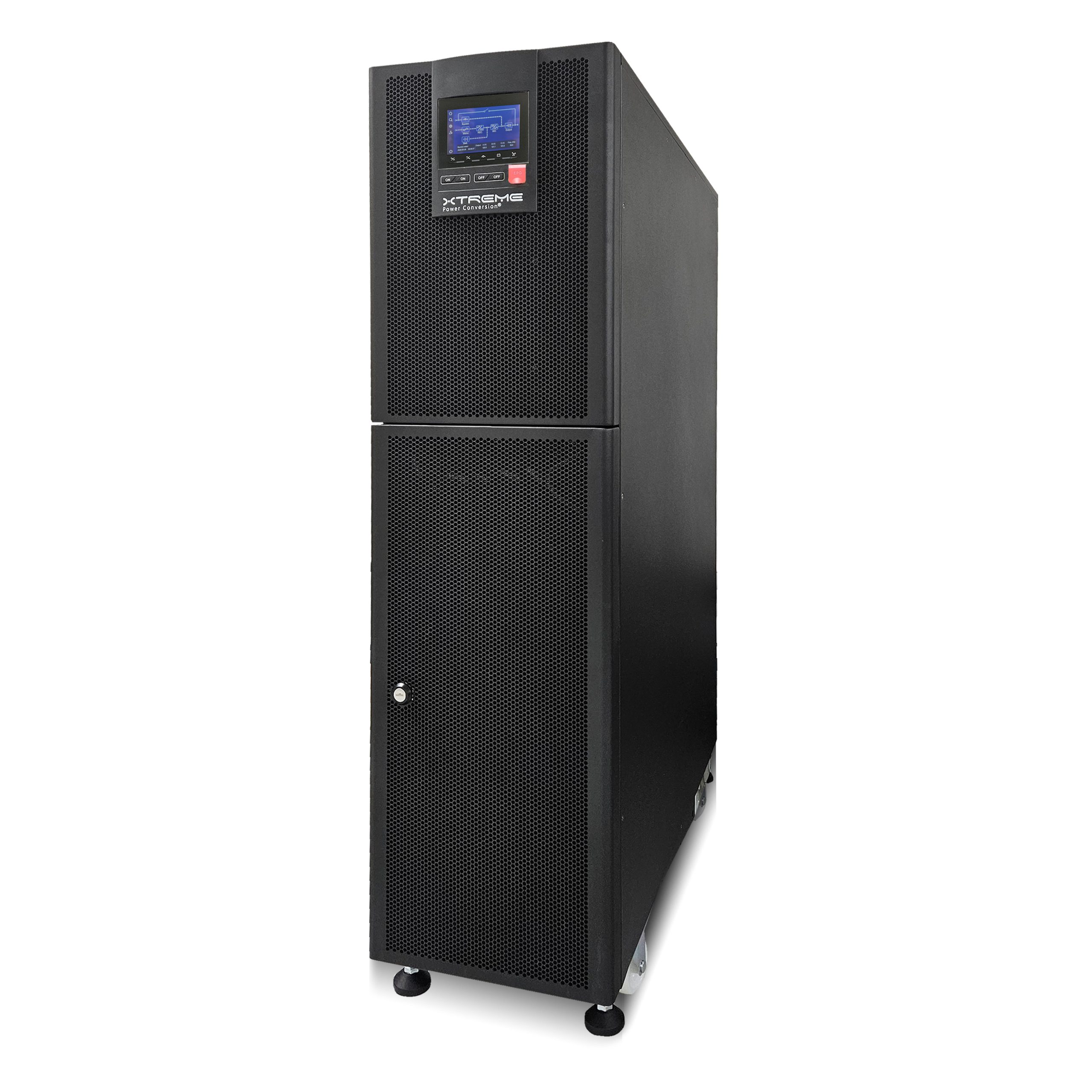


208/120V modular
Hot-swap power modules with N+1 redundancy, from a compact 2-slot frame to 140 kW.


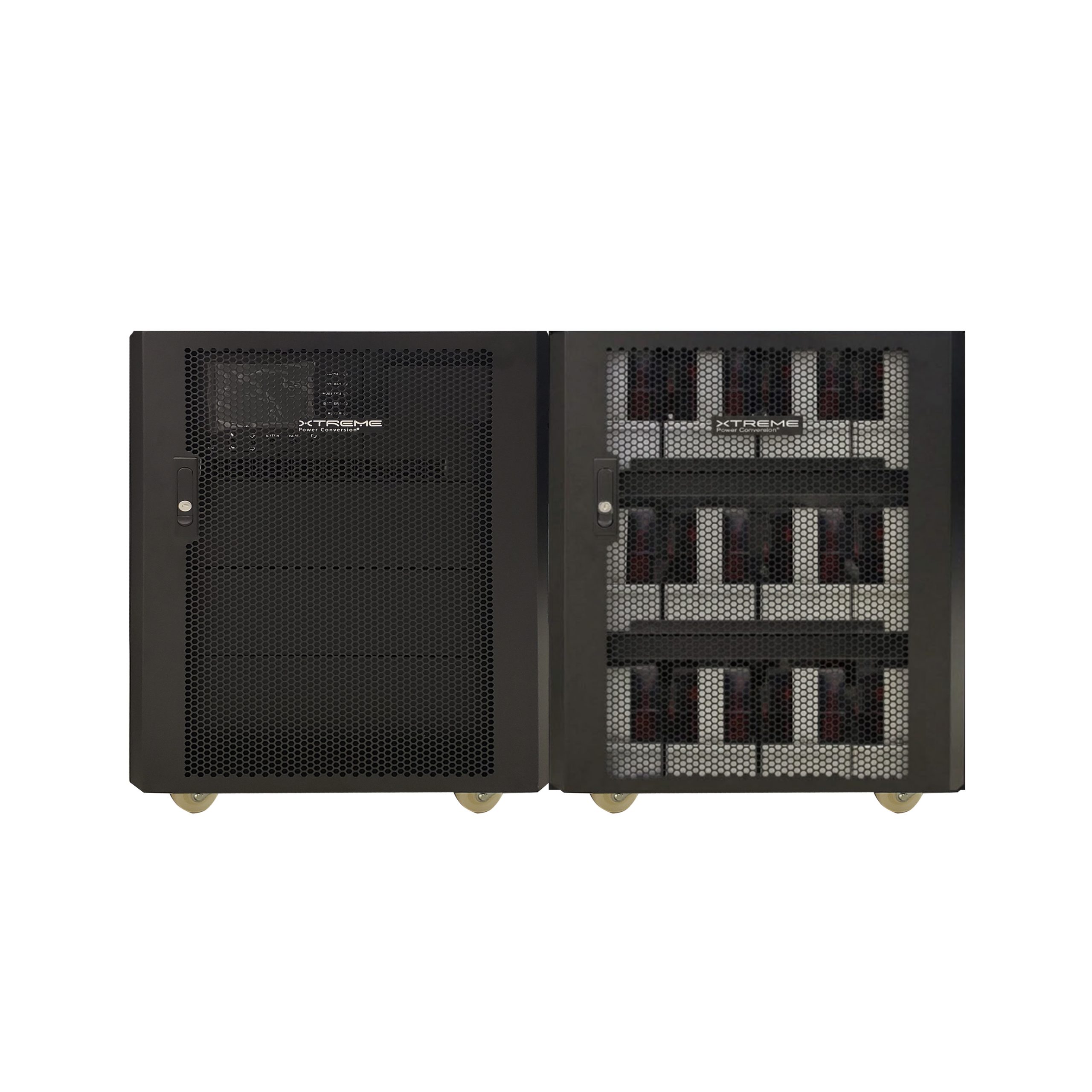


400V and 480V
Modular systems for 480V facilities and 400/230V international projects, up to 700 kW.
How to choose
| If you need | Start with |
|---|---|
| 10-30 kW at 208/120V with the batteries inside, in a small footprint | Li90 |
| 10-40 kW at 208/120V in a simple tower with VRLA batteries | E91 |
| A compact modular UPS at 208/120V, up to 24 kW | M90C |
| 208/120V modular with N+1, up to 140 kW | M90U family |
| 400/230V for international projects | M90Ci |
| 480V, from 50 kW to 700 kW | X90 |
| A rack-integrated UPS for AI and edge racks, 50-70 kW | Ai90 (ships early 2027) |
Frequently asked questions
Should I choose a 208/120V or a 480V UPS?
Match the facility service the UPS will connect to. Most commercial buildings and smaller data rooms in North America distribute 208/120V; larger data centers, hospitals and industrial sites often bring 480V to the UPS and step down after it. The 480V route usually means lower current and smaller conductors at higher power.
What is the difference between modular and monolithic UPS?
A monolithic UPS is one fixed power stage, like the E91 or Li90. A modular UPS is built from hot-swap power modules in a shared frame, so you can add capacity in steps, carry one extra module for N+1 redundancy, and replace a module without shutting down.
What does N+1 mean?
The UPS has one more power module than the load needs. If any one module fails, the others carry the full load and the failed module can be swapped while the system stays online.
Is lithium available for three-phase UPS?
Yes. The Li90 has LiFePO4 batteries inside the UPS cabinet from 10 to 30 kW, and the X90 can use Vision REVO TP LFP battery cabinets from 20.5 to 51.2 kWh.
Which three-phase UPS are TAA compliant?
See the TAA-compliant three-phase UPS page for the current list of models.